Species Profile
Carpenter Ants
Camponotus spp.
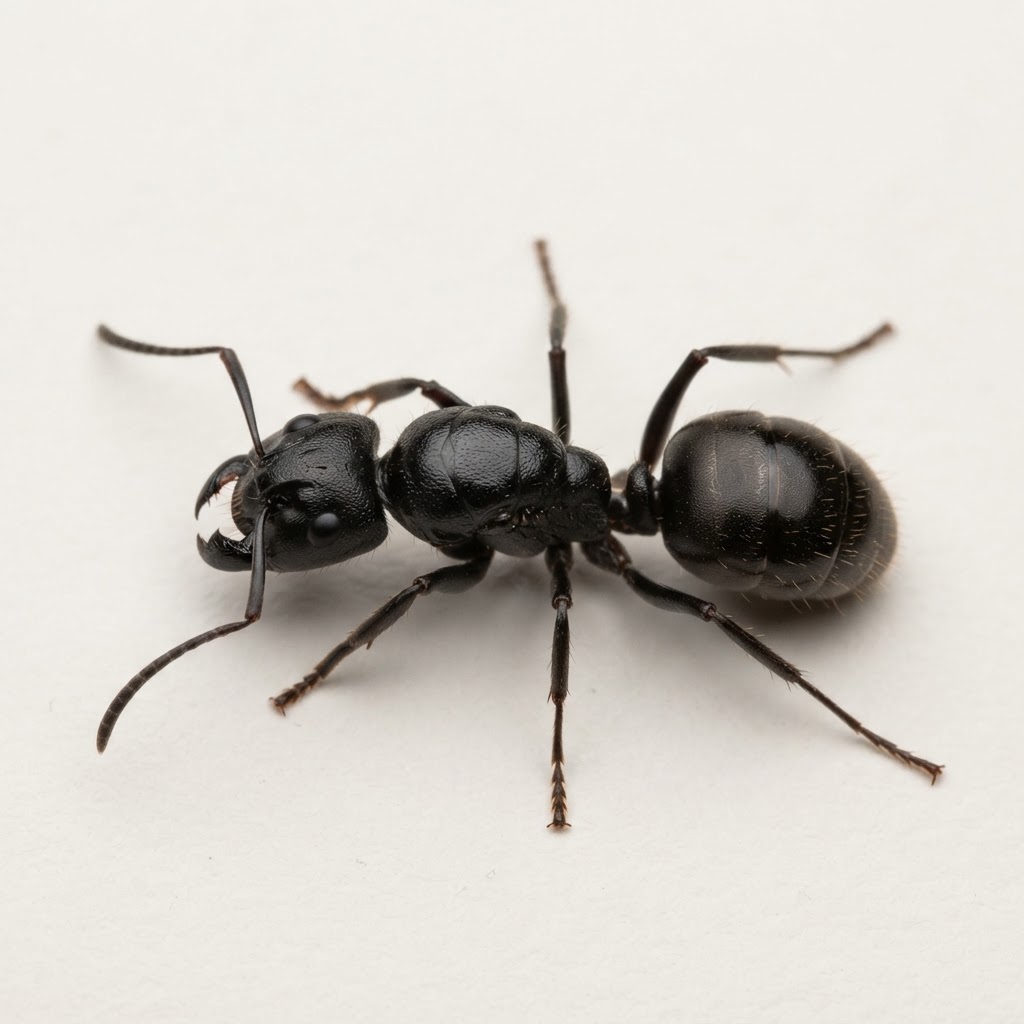
Carpenter ants (Camponotus species) are large, destructive ants that excavate galleries in wooden structures for nesting. Unlike termites, they do not eat wood — they tunnel through it to create nests, causing structural damage that can rival termite infestations over time. In the Western Cape, they commonly nest in damp or decaying timber, roof timbers, door frames and wooden decks. Their presence often indicates an underlying moisture problem.
Biology & Behaviour
Carpenter ants are nocturnal foragers, travelling up to 100 metres from the nest for food. They prefer damp, decaying wood for nest establishment but can expand into sound timber as colonies grow. A mature colony has a primary nest (containing the queen) and satellite nests. Workers excavate smooth, clean galleries — the telltale "sandpaper-smooth" tunnel walls distinguish them from termite damage. Colonies take 3–6 years to reach maturity, when they produce winged reproductives (alates) for new colony establishment.
Signs of Infestation
Infestation Indicators
Large (6–13mm) black or dark brown ants indoors, particularly at night
Piles of coarse sawdust-like frass (wood shavings) below nest sites
Faint rustling sounds inside walls or wooden structures at night
Smooth, clean galleries visible in damaged timber (unlike messy termite damage)
Winged ants emerging indoors — indicates a mature colony
Damp or rotting timber in roof, window frames or door frames
Clinical Organicism Protocol
Remediation Protocol
The Eco Pestelence 4-phase intervention methodology, calibrated specifically for carpenter ants.
Detection
Nocturnal survey following foraging trails to locate nest sites. Moisture mapping of timber structures — damp wood is the primary nesting target. Acoustic detection in wall voids and roof timbers. Satellite nest identification throughout the property.
Isolation
Timber moisture remediation — repair all leaks and improve ventilation. Removal and replacement of severely decayed timber. Sealing of all external access points where ants enter the structure.
Neutralization
Slow-acting gel bait matrices placed on active foraging trails — workers carry bait to colony, achieving queen elimination through trophallaxis. Direct nest treatment with residual dust in accessible galleries. Void injection in wall and roof cavities.
10-Day Elimination Programme
The initial treatment eliminates active pests while eggs continue hatching over the following days — newly hatched pests contact the residual treatment, progressively clearing the infestation within ~10 days.
Shielding
Timber moisture monitoring programme — the primary long-term control factor. Perimeter monitoring stations placed at foraging entry points. Annual timber inspection of roof, window and door frames.
Eco Commitment
Carpenter ants indicate a moisture problem — we address the root cause first. Our slow-acting bait approach eliminates the entire colony without broadcast spraying, protecting beneficial insects and the broader garden ecosystem.
Concerned about carpenter ants? Request a professional assessment.
Request Carpenter Ants AssessmentBack to EncyclopediaOther Species
 Ants
 American Cockroaches
 German Cockroaches
 Wasps
 Red-headed Cockroaches
 Oriental Cockroaches
 Fleas & Bed Bugs
 All Moths
 Rodents
 Spiders
 Millipedes & Centipedes
 Dune Moles
 Crickets
 Bird Removal
 Snails & Slugs
 Grain & Flour Beetles
 Weevils
 Bat Proofing
 Earwigs
 Mole Crickets
 Silverfish
 Gecko Control
 Mosquitoes
 Harvester Termites
 General Spray