Species Profile
Silverfish
Lepisma saccharina
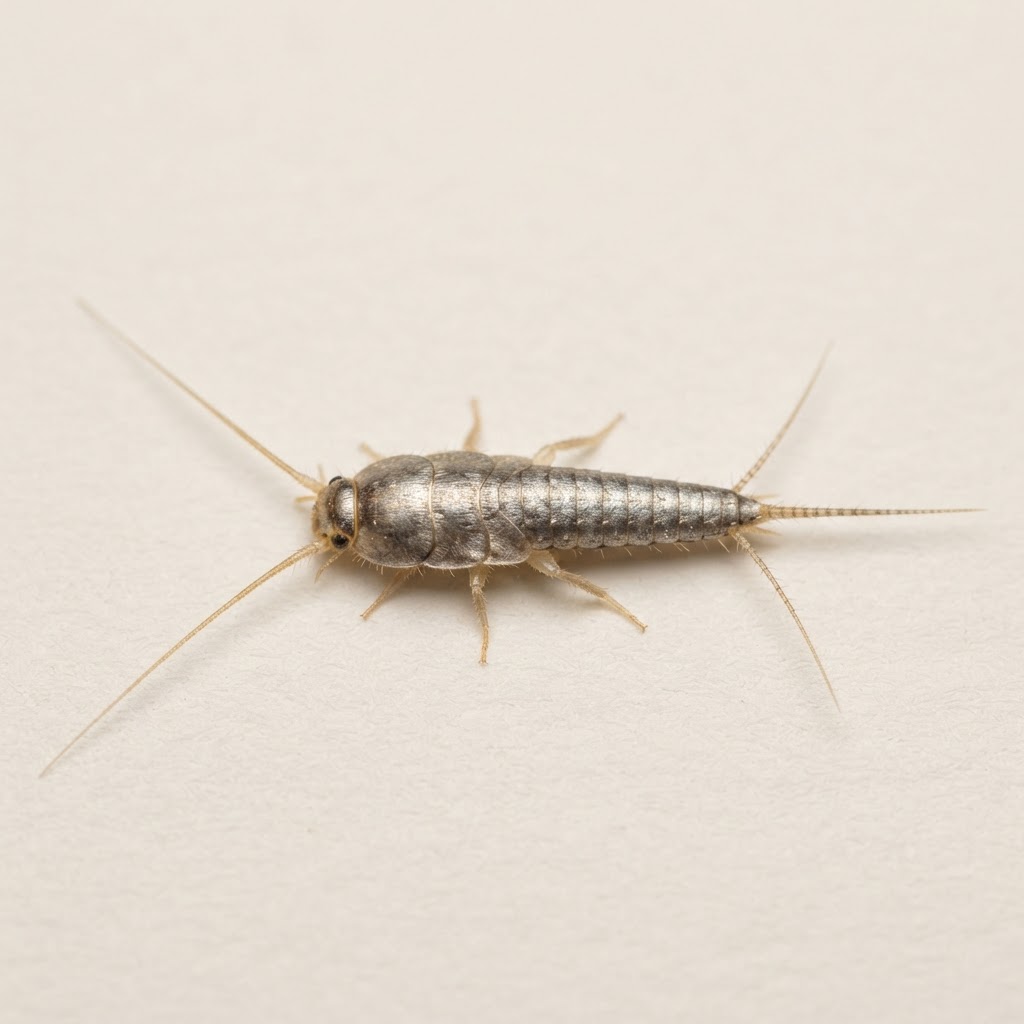
Silverfish (Lepisma saccharina) are ancient, wingless insects that thrive in humid, dark environments. In Western Cape homes, they are commonly found in bathrooms, roof voids, stored book collections and damp cupboards. They feed on starchy and sugary materials including paper, book bindings, wallpaper paste, photos, textiles and pantry goods. While not dangerous, they cause irreversible damage to books, documents and natural-fibre clothing over time.
Biology & Behaviour
Silverfish are extremely long-lived for insects — surviving up to 8 years. They are nocturnal and can survive without food for up to a year. They moult continuously throughout their lives, even as adults. Females lay eggs in crevices, with nymphs maturing slowly over 3–24 months depending on temperature and humidity. They prefer environments with 75–97% humidity and temperatures of 22–27°C.
Signs of Infestation
Infestation Indicators
Silver, teardrop-shaped insects 12–20mm darting across floors at night
Irregular feeding marks and notches on paper, book pages and wallpaper
Yellowish staining on paper, fabric and stored items
Shed exoskeletons and tiny black fecal pellets in dark cupboards
Holes in natural-fibre clothing, particularly in damp storage areas
Clinical Organicism Protocol
Remediation Protocol
The Eco Pestelence 4-phase intervention methodology, calibrated specifically for silverfish.
Detection
Nocturnal inspection of bathrooms, roof voids, bookshelves and storage areas. Sticky trap placement in suspected hotspots for 7-day population assessment. Humidity mapping to identify ideal habitat zones.
Isolation
Dehumidification of affected areas — the single most effective long-term deterrent. Removal and quarantine of infested books and documents. Storage of vulnerable items in sealed, dry containers.
Neutralization
Diatomaceous earth dusting in wall voids, behind skirting and in roof spaces — mechanical desiccation. Targeted residual insecticide in crack-and-crevice zones. Boric acid treatment in bookshelf and cupboard voids.
10-Day Elimination Programme
The initial treatment eliminates active pests while eggs continue hatching over the following days — newly hatched pests contact the residual treatment, progressively clearing the infestation within ~10 days.
Shielding
Ongoing humidity control — dehumidifier recommendation for chronically damp spaces. Annual inspection of stored books and documents. Silica gel desiccant placement in book storage and wardrobes.
Eco Commitment
Silverfish thrive in damp environments — we address the root cause through moisture control rather than chemical dependence. Diatomaceous earth and boric acid are our primary treatments, both low-toxicity and targeted to void spaces only.
Concerned about silverfish? Request a professional assessment.
Request Silverfish AssessmentBack to EncyclopediaOther Species
 Ants
 American Cockroaches
 German Cockroaches
 Wasps
 Red-headed Cockroaches
 Oriental Cockroaches
 Fleas & Bed Bugs
 All Moths
 Rodents
 Spiders
 Millipedes & Centipedes
 Dune Moles
 Crickets
 Bird Removal
 Snails & Slugs
 Grain & Flour Beetles
 Weevils
 Bat Proofing
 Earwigs
 Mole Crickets
 Carpenter Ants
 Gecko Control
 Mosquitoes
 Harvester Termites
 General Spray