Species Profile
Dune Moles
Bathyergus suillus
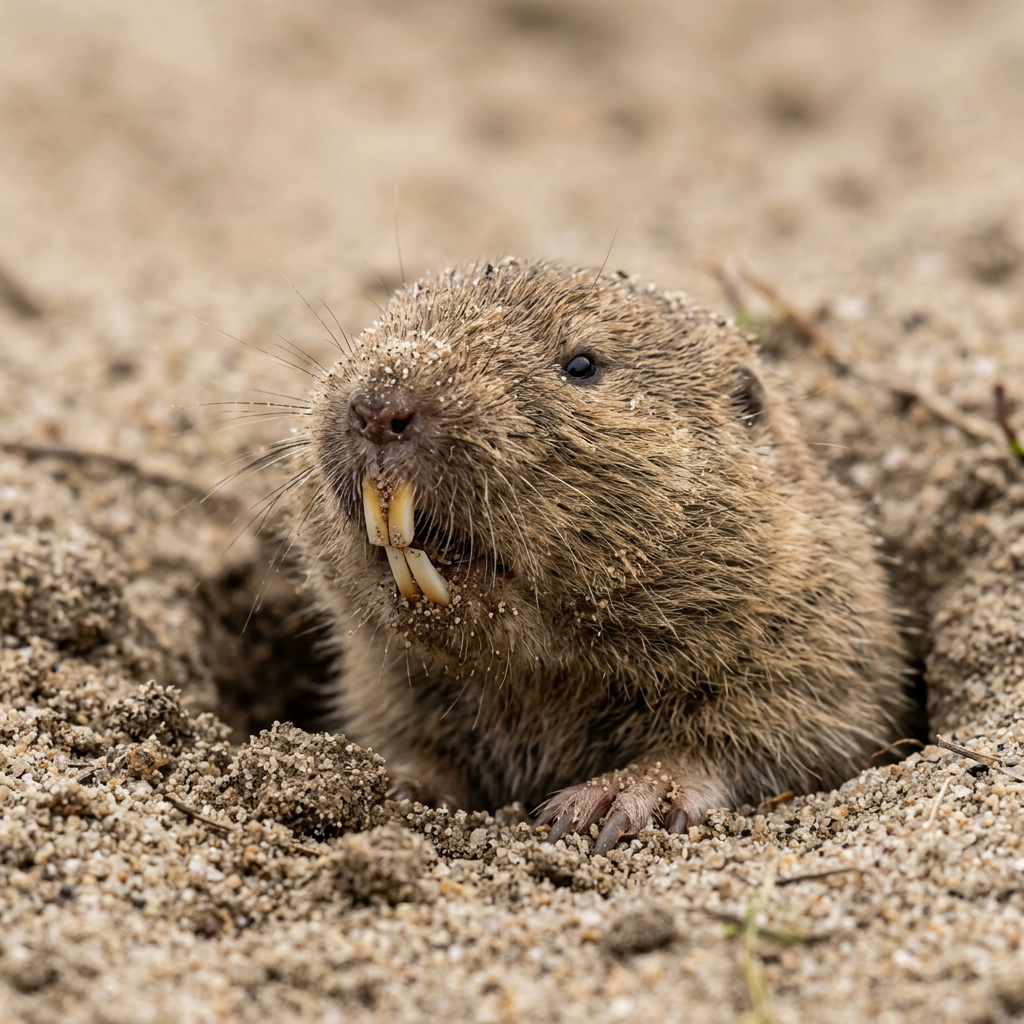
The Cape dune mole-rat (Bathyergus suillus) is the largest member of the African mole-rat family and is endemic to the Western Cape coastal regions. Unlike pest rodents, dune moles are subterranean herbivores that cause significant damage to gardens, lawns, sports fields and agricultural land through their extensive tunnelling systems and feeding on root systems, bulbs and tubers.
Biology & Behaviour
Dune moles are strictly subterranean, almost never appearing above ground. They excavate tunnel systems up to 200 metres in length, pushing up distinctive fan-shaped mounds of loose soil. They are solitary and fiercely territorial — each individual maintains its own tunnel network. Their primary food source is the underground portions of plants — bulbs, corms, rhizomes and roots — making them particularly destructive in ornamental gardens and sports turf.
Signs of Infestation
Infestation Indicators
Large fan-shaped mounds of loose, fine soil appearing overnight on lawns or garden beds
Wilting or dying plants with no visible above-ground cause — root systems consumed underground
Soft, sunken areas in turf indicating tunnel collapse
Raised ridges across lawns showing shallow tunnel runs
Rapid reappearance of mounds after flattening (within 24–48 hours)
Clinical Organicism Protocol
Remediation Protocol
The Eco Pestelence 4-phase intervention methodology, calibrated specifically for dune moles.
Detection
Property survey mapping all active mound locations and tunnel run directions. Active tunnel probing to identify primary feeding runs vs exploratory tunnels. Assessment of garden vulnerability — bulb plantings, turf areas, raised beds and irrigation zones.
Isolation
Identification of most recently active tunnel systems (soil colour and moisture). Strategic blocking of tunnel entrances to force mole into treatment zones. Advisory on removal of high-attractant plants from high-risk zones as interim measure.
Neutralization
Placement of species-specific underground traps in confirmed active runs — humane, rapid-action traps sized appropriately for Bathyergus suillus. Toxic gas treatment (aluminium phosphide) as alternative in severe infestations with no wildlife-sensitive zones nearby. Bait placement in tunnel runs using grain-based rodenticide as supplementary method in confirmed active tunnels.
10-Day Elimination Programme
The initial treatment eliminates active pests while eggs continue hatching over the following days — newly hatched pests contact the residual treatment, progressively clearing the infestation within ~10 days.
Shielding
Underground mesh barrier installation (30cm depth, 1m wide) around high-value planting areas to physically exclude future incursion. Garden irrigation review — moist soils attract moles from surrounding areas. Seasonal monitoring programme with monthly property walk-over inspections during spring and autumn activity peaks.
Eco Commitment
Dune moles are endemic to the Western Cape and play an ecological role in soil aeration and seed dispersal. Where possible, Eco Pestelence recommends exclusion and deterrence over lethal control, and all treatments are conducted with minimum disruption to non-target soil fauna.
Concerned about dune moles? Request a professional assessment.
Request Dune Moles AssessmentBack to EncyclopediaOther Species
 Ants
 American Cockroaches
 German Cockroaches
 Wasps
 Red-headed Cockroaches
 Oriental Cockroaches
 Fleas & Bed Bugs
 All Moths
 Rodents
 Spiders
 Millipedes & Centipedes
 Crickets
 Bird Removal
 Snails & Slugs
 Grain & Flour Beetles
 Weevils
 Bat Proofing
 Earwigs
 Mole Crickets
 Silverfish
 Carpenter Ants
 Gecko Control
 Mosquitoes
 Harvester Termites
 General Spray